
Introduction
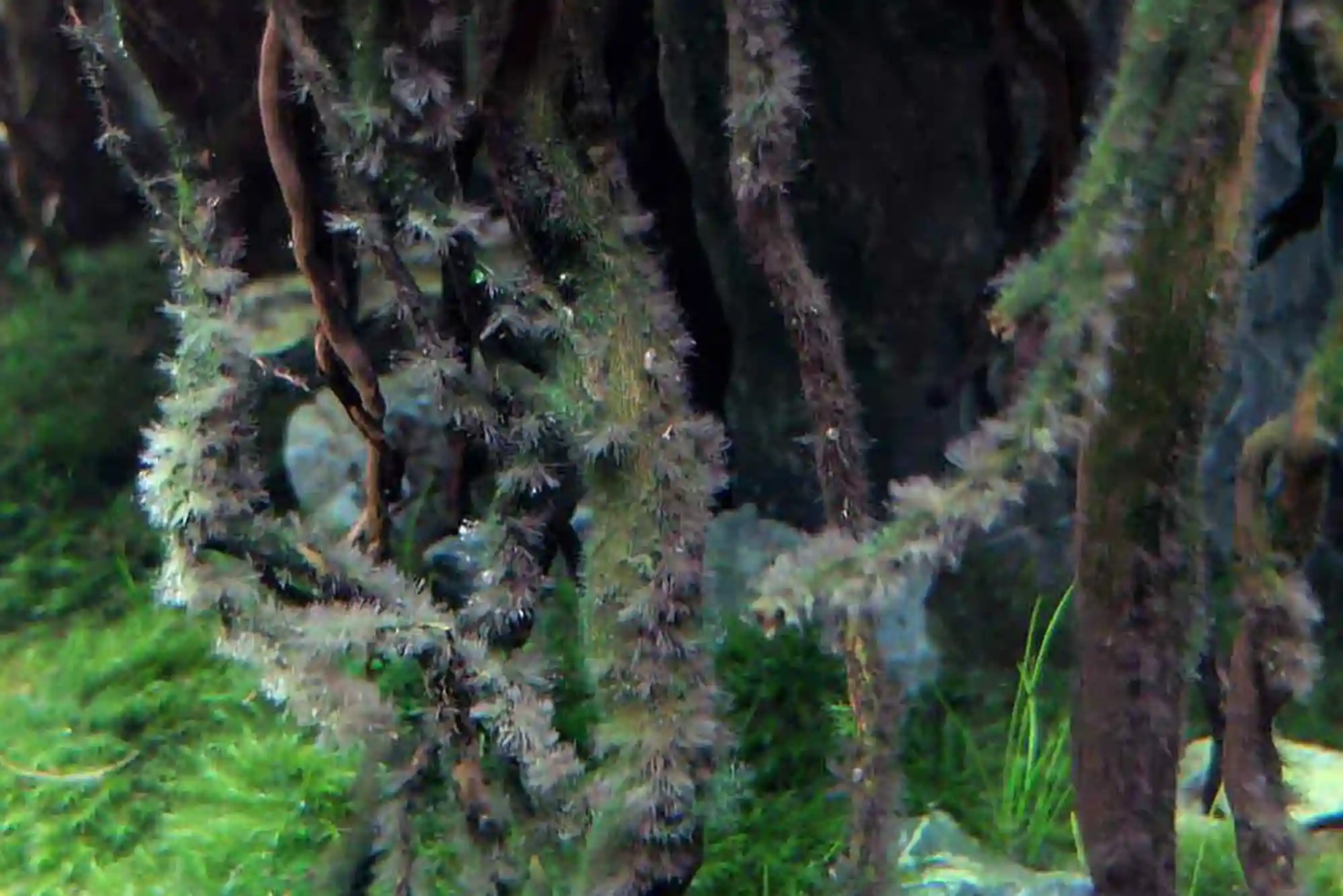
Black beard algae can quickly turn a beautiful planted aquarium into a frustrating maintenance project. Its dark, bristly growth often appears on plant leaves, driftwood, rocks, and aquarium equipment. Once established, it can be surprisingly difficult to remove.
Learning how to stop black beard algae in planted aquariums starts with understanding why it appears. Black beard algae, commonly called BBA, usually develops when aquarium conditions become unstable. Poor circulation, inconsistent carbon availability, excessive lighting, and organic waste can all contribute.
The good news is that BBA can be controlled without tearing down your aquarium. The goal is not simply to kill existing algae. You also need to correct the conditions that allow it to return.
What Is Black Beard Algae?
Black beard algae is a type of red algae that belongs to the genus Audouinella. Despite its name, it can appear dark green, gray, purple, or nearly black.
It usually grows in short, coarse tufts. These tufts resemble a small beard, which explains the common name. BBA can attach strongly to hard surfaces and plant leaves.
Healthy aquarium plants can sometimes become covered when conditions favor algae growth. Slow-growing plants are especially vulnerable because algae can establish before the leaves are replaced.


Understanding this growth pattern is important when learning how to stop black beard algae in planted aquariums. Removing visible algae helps, but environmental correction is what provides long-term control.
Why Does Black Beard Algae Grow in Planted Aquariums?
BBA rarely appears because of one single problem. Instead, several aquarium conditions can work together.
Unstable CO₂ Levels
In planted aquariums, inconsistent carbon dioxide availability can contribute to algae problems. Plants need carbon for photosynthesis and growth.
When CO₂ levels fluctuate significantly, plants may struggle to compete effectively. Meanwhile, algae can take advantage of stressed or slow-growing areas.
This does not mean that every BBA outbreak requires more CO₂. Stability is usually more important than simply increasing the amount.
If you use injected CO₂, keep the system consistent throughout the photoperiod. Avoid large fluctuations caused by irregular injection or poor diffusion.
Excessive or Unbalanced Lighting
Light drives photosynthesis, but more light does not automatically produce healthier plants. Strong lighting can increase plant demand for CO₂ and nutrients.
If plants cannot meet that demand, algae may gain an advantage. This is especially common when lighting intensity is high while CO₂ distribution is inconsistent.
Reducing light intensity or shortening the photoperiod can therefore help control BBA. Make changes gradually and observe plant growth.
Poor Water Flow
Good circulation distributes CO₂ and nutrients throughout the aquarium. Poor flow can create stagnant areas where plants receive fewer resources.
BBA frequently appears around filter outlets, equipment, hardscape, and areas with changing water movement. However, its presence near flow does not mean strong flow causes BBA.
Instead, inconsistent distribution may indicate an underlying balance problem.
Check whether plants move gently throughout the aquarium. Avoid extremely strong currents that stress fish or uproot plants.
Excess Organic Waste
Decomposing leaves, uneaten food, and accumulated debris can increase organic waste. Heavy organic buildup can make aquarium maintenance more difficult.
Regular maintenance helps prevent this problem. Remove dead leaves before they decompose inside the aquarium.
Cleaning filter media appropriately can also improve circulation. However, avoid replacing beneficial biological media unnecessarily.
How to Stop Black Beard Algae in Planted Aquariums
The most effective approach combines manual removal with environmental improvements.
Start by removing as much BBA as possible. Heavily affected leaves can often be trimmed away. This immediately reduces the amount of algae inside the aquarium.
Next, examine your lighting schedule, CO₂ stability, water movement, feeding routine, and maintenance habits. Look for changes that may have occurred before the outbreak.
Do not make several dramatic changes simultaneously. Sudden changes can destabilize the aquarium further.
Instead, make controlled adjustments and monitor the response over several weeks.
Remove Heavily Infested Leaves
If a plant leaf is covered with BBA, trimming it may be easier than trying to clean it. This works particularly well with fast-growing stem plants.
Avoid removing healthy leaves unnecessarily. Plants need enough foliage to continue growing strongly.
After trimming, dispose of the affected material outside the aquarium. Do not allow loose algae fragments to circulate throughout the tank.
Improve CO₂ Distribution
For CO₂-injected aquariums, check whether CO₂ reaches the entire planted area. Diffuser placement can make a significant difference.
Place the diffuser where circulation can distribute dissolved CO₂ effectively. A properly positioned filter outlet can help move enriched water around the aquarium.
Consistency also matters. Avoid large daily fluctuations in CO₂ availability.
If you do not inject CO₂, focus on stable lighting and healthy plant growth instead. Do not add CO₂ simply because BBA is present.
Adjust the Lighting Schedule
Lighting should match the needs of your plants and the aquarium’s carbon availability.
If BBA is spreading quickly, consider reducing the photoperiod temporarily. Lowering intensity can also help if the aquarium receives very strong light.
Avoid leaving aquarium lights on for excessive periods. Longer lighting does not necessarily mean faster plant growth.
Observe your plants after making changes. Healthy new growth is a more useful indicator than trying to eliminate algae overnight.
Maintain Consistent Water Changes
Regular water changes help maintain stable aquarium conditions. They also remove dissolved waste and replenish certain minerals.
A consistent maintenance routine is usually better than occasional large interventions.
During water changes, gently remove debris from the substrate. Clean accessible hardscape surfaces when necessary.
Always match replacement water appropriately for your aquarium inhabitants. Sudden changes in water chemistry can stress fish and invertebrates.
Clean Filter Media Carefully
A clogged filter can reduce circulation and create maintenance problems. Check mechanical filtration regularly.
Rinse mechanical media using removed aquarium water when appropriate. This helps remove debris without unnecessarily exposing biological media to untreated tap water.
Do not clean every component aggressively at the same time. Beneficial bacteria are an important part of biological filtration.
Can You Manually Remove Black Beard Algae?
Yes, manual removal is one of the most useful first steps. However, physically removing BBA does not address the underlying cause.
Use a suitable aquarium brush or scraper for hard surfaces. For plants, trimming affected leaves is often safer.
Hardscape can sometimes be removed temporarily for easier cleaning. Scrub the surface thoroughly before returning it to the aquarium.
Manual removal works best when combined with better aquarium conditions. Otherwise, new growth may appear shortly afterward.
Can Liquid Carbon Kill Black Beard Algae?
Liquid carbon products are often used by aquarium keepers against BBA. They may weaken or damage certain algae when used correctly.
However, these products should not be treated as a complete solution. Product concentrations and instructions vary considerably.
Some aquatic plants and sensitive animals can react negatively to incorrect dosing. Always follow the manufacturer’s instructions.
Never assume that increasing the dose will produce faster results. More product can create unnecessary risks for aquarium inhabitants.
The better long-term strategy is still improving plant growth and aquarium stability.
How Long Does Black Beard Algae Take to Disappear?
There is no universal timeline for eliminating BBA. The answer depends on how established the algae is and whether its underlying causes are corrected.
Small outbreaks may become manageable within several weeks. Heavy infestations can take considerably longer.
Existing algae may remain attached even after conditions improve. New growth stopping is an important sign that your approach is working.
Over time, old algae can be removed during maintenance. New plant growth can then gradually replace damaged foliage.
Patience is therefore essential when learning how to stop black beard algae in planted aquariums.
How to Prevent Black Beard Algae From Returning
Prevention begins with consistency. Avoid constantly changing lighting, CO₂, fertilizers, and maintenance routines.
Observe your aquarium every day. Look for changes in plant growth, water clarity, algae appearance, and circulation.
Remove dying leaves promptly. Keep the glass clean and prevent excessive debris from accumulating.
Feed fish appropriately and avoid unnecessary overfeeding. Uneaten food can contribute to aquarium waste.
Keep equipment functioning properly. A clogged intake, weak circulation, or poorly positioned outlet can gradually affect aquarium conditions.
Most importantly, focus on healthy plant growth. Strong plants are better competitors for available resources.
Common Mistakes When Treating Black Beard Algae
One common mistake is increasing light because plants appear slow. This can increase algae pressure when carbon availability is already limited.
Another mistake is repeatedly using algae treatments without addressing aquarium conditions. Chemical treatments may reduce visible algae temporarily, but the original problem can remain.
Some aquarists also make too many changes at once. Changing lighting, CO₂, fertilizer, filtration, and water chemistry simultaneously makes it difficult to understand what worked.
A measured approach is usually more useful. Change one or two important factors, then monitor the aquarium.
Remember that planted tanks are living ecosystems. Stability often produces better results than aggressive intervention.
Frequently Asked Questions
What causes black beard algae in a planted aquarium?
Black beard algae is associated with several factors, including unstable conditions, poor CO₂ distribution, excessive lighting, and accumulated organic waste. There is rarely one universal cause.
How do I permanently get rid of black beard algae?
Permanent control requires removing existing algae and correcting the conditions that support new growth. Improve consistency in lighting, CO₂, circulation, feeding, and maintenance.
Does CO₂ get rid of black beard algae?
Stable CO₂ can support stronger plant growth and may help reduce conditions that favor BBA. However, CO₂ alone does not guarantee algae removal.
Does black beard algae mean too much light?
Not necessarily. Excessive lighting can contribute to algae problems, especially when carbon availability does not match plant demand. Lighting should be balanced with the entire aquarium system.
Will black beard algae go away on its own?
Usually, established BBA does not simply disappear without intervention. Improving aquarium conditions can stop new growth, while existing algae generally needs removal.
Conclusion
Learning how to stop black beard algae in planted aquariums is mainly about restoring balance rather than searching for a single miracle treatment.
Start by removing heavily affected leaves and cleaning accessible surfaces. Then examine your lighting, CO₂ stability, circulation, feeding, and maintenance routine.