
Introduction
Choosing the right substrate can make a major difference in a planted aquarium. It affects plant growth, root development, water chemistry, maintenance, and even the overall appearance of your tank. However, there is no single substrate that works perfectly for every aquarium.
The Best Substrates for Planted Tanks: Soil, Sand, or Gravel? depends on the plants you want to grow, your maintenance routine, and your aquarium setup. Aquarium soil is nutrient-rich and excellent for demanding plants. Sand creates a smooth, natural appearance, while gravel offers good water movement and simple maintenance.
Understanding these differences makes it easier to choose a substrate that supports healthy plants without creating unnecessary problems. This guide compares soil, sand, and gravel to help you make the right decision.
Why Substrate Matters in a Planted Aquarium
Substrate does much more than cover the bottom of an aquarium. It provides physical support for plant roots and can influence how nutrients move through the tank. Some substrates also affect water chemistry.
Root-feeding plants depend heavily on nutrients available around their roots. Therefore, the substrate can directly influence their growth and appearance.
A suitable substrate also gives beneficial microorganisms a place to establish. These microorganisms contribute to biological activity within the aquarium.


The Best Substrates for Planted Tanks: Soil, Sand, or Gravel? should therefore be selected according to your plants and aquarium conditions rather than appearance alone.
Aquarium Soil for Planted Tanks
Aquarium soil is often considered one of the strongest choices for planted aquariums. Many planted-tank soils contain nutrients that support root development and plant growth.
These substrates are especially useful for plants that feed heavily through their roots. They can also provide a softer growing medium than traditional gravel.
Benefits of Aquarium Soil
Aquarium soil offers several advantages for serious planted-tank keepers. Its nutrient content can help plants establish quickly after planting.
The relatively soft texture also makes planting easier. Roots can spread through the substrate without encountering large, hard pieces.
Many specialized soils are designed specifically for aquatic plants. Some can also influence water parameters, which may benefit certain species.
However, nutrient-rich soil is not completely maintenance-free. New soil can release nutrients into the water during the early stages of an aquarium.
This may contribute to algae problems if lighting and nutrient levels are not balanced. Regular monitoring is therefore important.
When Should You Choose Aquarium Soil?
Soil is a strong choice when your aquarium focuses heavily on live plants. It is particularly useful for carpeting plants and species with substantial root systems.
It can also be beneficial when you want to grow demanding plants without relying entirely on root tabs.
However, beginners should understand that active soils may require more careful management. Their effects on water chemistry can vary between products.
Sand as a Planted Tank Substrate
Sand is another popular option for planted aquariums. It creates a clean, natural appearance and works particularly well with certain aquarium designs.
Fine sand can make plants and hardscape stand out beautifully. It is also comfortable for bottom-dwelling fish that naturally sift through the substrate.
However, sand does not usually provide the same nutrient supply as specialized aquarium soil. Root-feeding plants may therefore need additional nutrition.
Advantages of Sand
One major advantage of sand is its appearance. Fine grains create a smooth bottom that can give an aquarium a natural riverbed appearance.
Sand is also relatively easy to clean when used correctly. Waste usually remains on the surface rather than disappearing deeply between large pieces.
This makes routine maintenance straightforward.
However, extremely fine sand can compact over time. Poorly managed compacted areas may reduce water movement around plant roots.
Can Plants Grow in Sand?
Yes, many aquarium plants can grow successfully in sand. However, sand alone may not provide enough nutrients for demanding root feeders.
Root tabs can help supply nutrients beneath plants. Liquid fertilizers can also support plants that primarily absorb nutrients from the water column.
Choosing plants that suit your substrate is therefore important.
Gravel for Planted Aquariums
Gravel remains one of the most practical substrate choices for planted tanks. It is available in many sizes, textures, and colors.
Unlike very fine sand, gravel generally allows more water movement between individual pieces. This can create useful spaces for microorganisms and plant roots.
Basic gravel usually contains little nutritional value. Therefore, plants that rely heavily on their roots may require root tabs or another nutrient source.
Benefits of Gravel
Gravel is easy to work with and usually does not create significant cloudiness when properly prepared. It also makes repositioning plants relatively simple.
Its open structure allows water to move between the grains. This can be useful for maintaining healthy substrate conditions.
Gravel is particularly suitable for low-tech planted aquariums. It can support hardy plants when combined with appropriate lighting and fertilization.
For beginners, gravel can offer a forgiving starting point.
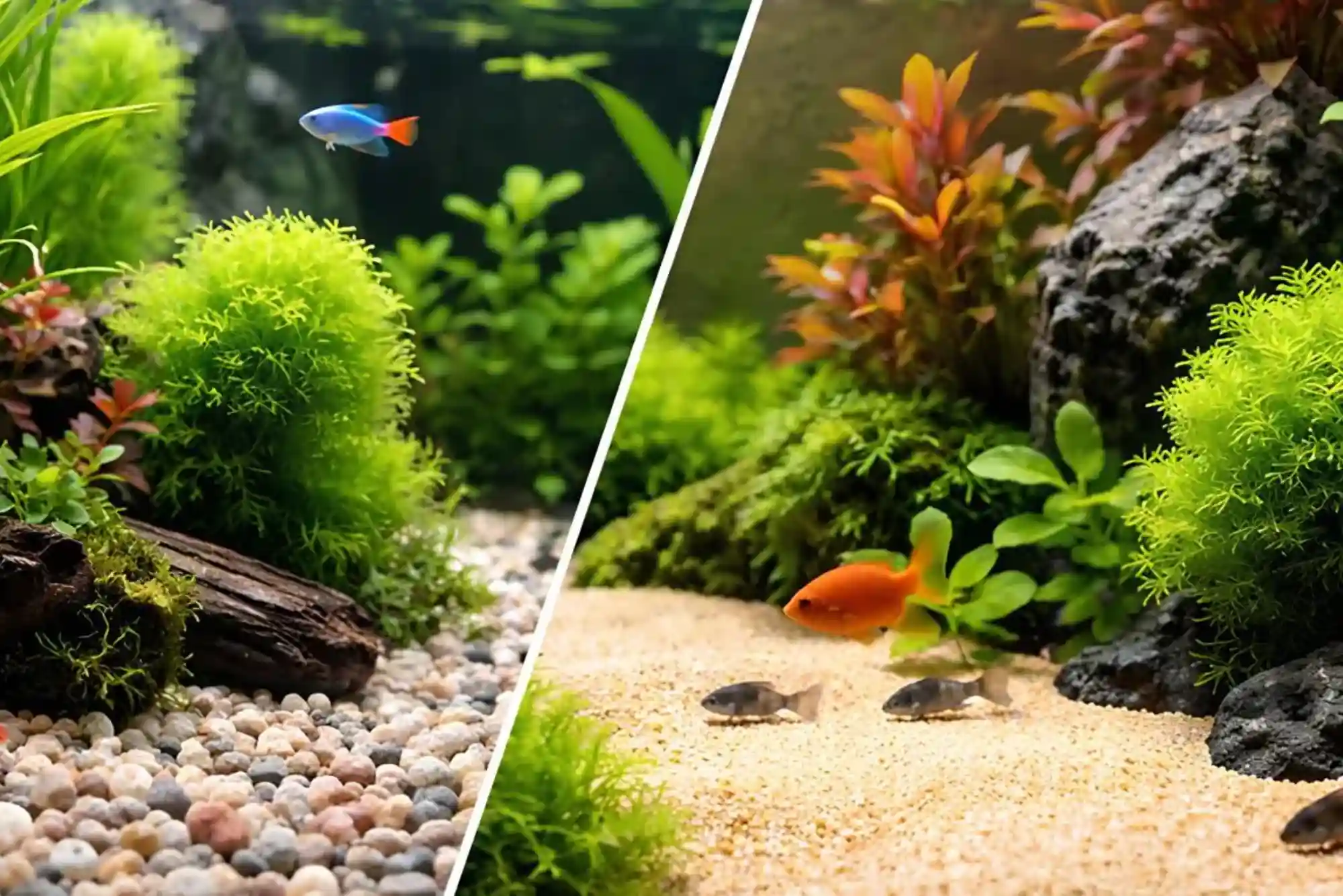
Soil vs Sand vs Gravel for Planted Tanks
When comparing the Best Substrates for Planted Tanks: Soil, Sand, or Gravel?, think about the needs of your plants first.
Soil generally provides the strongest nutritional foundation for demanding planted aquariums. It is a good choice when plant growth is your primary goal.
Sand is ideal when appearance and bottom-dwelling livestock are important. It can work well with plants when additional nutrients are supplied.
Gravel provides versatility and simplicity. It is particularly useful for beginners and low-maintenance planted setups.
There is also no rule saying you must use only one substrate. Many aquarists combine materials to create different zones within the aquarium.
How to Choose the Best Substrate for Your Plants
Your plant selection should influence your substrate decision. Different plants have different nutritional and rooting requirements.
Carpeting plants often benefit from nutrient-rich substrates and stable planting conditions. Root-heavy plants may also perform better when nutrients are available around their roots.
Epiphytic plants are different. Species such as Anubias and Java fern are commonly attached to rocks or driftwood rather than planted deeply.
For these plants, substrate nutrition is less important. Water-column fertilization may provide more useful nutrients.
Therefore, the Best Substrates for Planted Tanks: Soil, Sand, or Gravel? depends partly on whether your plants are root feeders or primarily water-column feeders.
Can You Mix Soil, Sand, and Gravel?
Yes, combining substrates can create an attractive and functional aquarium. However, the materials should be arranged carefully.
One common approach is placing nutrient-rich soil in planted areas and using sand or gravel around it. This creates visual contrast while keeping nutrients concentrated where plants need them.
A barrier or careful planting technique can help prevent fine soil from mixing into decorative sand.
Mixing substrates also allows you to create different environments for different plants. However, avoid making the setup unnecessarily complicated if you are new to planted aquariums.
A simple substrate system is often easier to maintain.
How Deep Should Planted Tank Substrate Be?
Substrate depth depends on the plants and aquarium design. A very shallow layer may not provide enough room for roots to establish.
On the other hand, an excessively deep substrate can make maintenance more difficult.
A moderate depth is generally practical for many planted aquariums. You can create a deeper layer toward the back of the aquarium and a shallower foreground.
This creates visual depth while providing additional rooting space for larger plants.
Preparing Substrate Before Adding It
Proper preparation can prevent many common aquarium problems. Always follow the manufacturer’s instructions for specialized aquarium soil.
Inert gravel and many types of sand should generally be rinsed before use. This removes excess dust and reduces initial cloudiness.
However, some active soils should not be aggressively rinsed because washing can damage their structure or remove useful components.
Add substrate carefully to avoid damaging the aquarium glass. Placing a plate or similar object on the bottom can help reduce disturbance while filling the tank.
Substrate and Aquarium Maintenance
Even the Best Substrates for Planted Tanks: Soil, Sand, or Gravel? will not replace proper aquarium maintenance.
Remove visible debris regularly, especially from areas where waste accumulates. Avoid constantly disturbing plant roots because this can stress established plants.
Use appropriate fertilizers according to plant requirements. Monitor water parameters when using active substrates that influence chemistry.
Lighting should also match the aquarium’s plant load. Excessive light combined with poor nutrient management can encourage algae.
A balanced aquarium usually performs better than one where a single factor is pushed too aggressively.
Common Substrate Mistakes to Avoid
One common mistake is choosing a substrate based only on appearance. A beautiful substrate may not suit the plants or livestock you keep.
Another mistake is assuming that all soil, sand, and gravel provide nutrients. Many substrates are completely inert.
Plant nutrition must therefore be considered separately.
Using extremely deep fine sand can also create maintenance challenges. Meanwhile, very coarse gravel may make planting delicate species difficult.
Finally, avoid changing substrate unnecessarily after plants have become established. Major disturbance can disrupt roots and biological stability.
Best Substrate for Beginners
For beginners, gravel is often a practical starting point because it is simple and forgiving. Hardy plants can grow well when gravel is paired with appropriate fertilizers.
Sand can also work well for beginners who prefer its appearance. Root tabs can provide additional nutrition for suitable plants.
Aquarium soil is excellent for dedicated planted-tank setups. However, beginners should learn how active substrates affect water chemistry and nutrient management.
Ultimately, the best beginner substrate is one that matches the planned plants and maintenance routine.
Frequently Asked Questions
What is the best substrate for a planted aquarium?
There is no universal winner. Aquarium soil is excellent for nutrient-demanding plants, while sand and gravel can work well with additional fertilization.
Is soil or gravel better for planted tanks?
Soil usually offers more nutrients for root-feeding plants. Gravel is easier to maintain and works well when nutrients are supplied separately.
Can plants grow in aquarium sand?
Yes. Many plants can grow in sand when they receive appropriate nutrients through root tabs or the water column.
Is gravel good for planted tanks?
Yes. Gravel provides good support and water movement around roots. However, inert gravel usually needs additional fertilization for demanding plants.
Do planted tanks need special substrate?
Not always. Some plants can thrive in ordinary gravel or sand with proper fertilization. Specialized soil is helpful for demanding planted setups.
How thick should substrate be in a planted tank?
A moderate substrate depth is usually sufficient for many plants. Larger root systems may benefit from additional depth, especially toward the back.
Conclusion
The Best Substrates for Planted Tanks: Soil, Sand, or Gravel? ultimately depends on your plants, livestock, maintenance habits, and aquarium goals.
Aquarium soil is a strong choice for nutrient-demanding planted aquariums. Sand provides a natural appearance and works well with suitable plants and additional fertilization. Gravel offers simplicity, flexibility, and easy maintenance.