

Makkah Ziyarat: A Complete Guide to the Holy Places in Makkah
Makkah is the most sacred city in Islam and holds a special place in the hearts of Muslims around the world. Every year, millions of Muslims travel to this blessed city to perform Hajj and Umrah, pray at Masjid al-Haram, and experience the spiritual atmosphere surrounding the Holy Kaaba. Beyond performing religious rituals, many visitors also wish to explore the historical places connected with the life of Prophet Muhammad (PBUH), the early days of Islam, and important events in Islamic history.
This is where Makkah ziyarat becomes a meaningful part of the journey. Visiting historical Islamic landmarks allows Muslims to learn more about the struggles, sacrifices, and dedication of the Prophet Muhammad (PBUH) and his companions. These places help visitors understand how Islam spread and how the foundations of the Muslim community were established.
Whether you’re visiting Makkah for the first time or returning for another Umrah, exploring its historical landmarks can make your journey even more memorable. From the famous Cave of Hira to Jabal Thawr, Mina, Arafat, and other important locations, each place has a story worth learning.
In this detailed guide, we’ll explore the most famous historical places in Makkah, their Islamic significance, what you can expect during your visit, and practical tips to help you make the most of your experience.
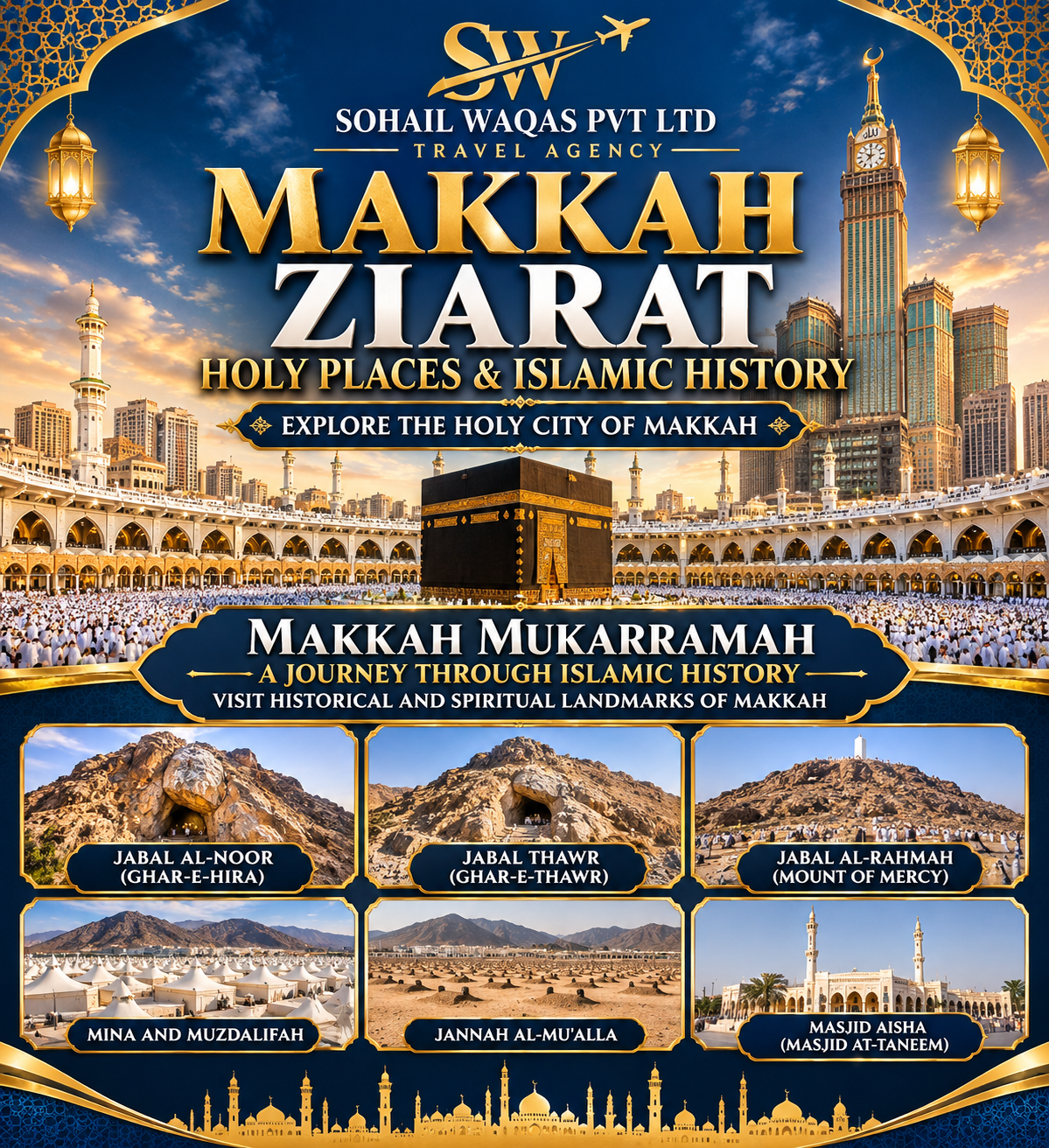
What Is Makkah Ziyarat?
Ziyarat refers to visiting places of religious, historical, or spiritual importance. In Makkah, it commonly means visiting locations associated with Islamic history, the life of Prophet Muhammad (PBUH), and important events from the early period of Islam.
These visits provide an opportunity to learn about the history of Islam and reflect on the hardships faced by the Prophet (PBUH) and his companions.


Some of the most popular places visited include:
Jabal al-Noor and the Cave of Hira.
Jabal Thawr and the Cave of Thawr.
Jannat al-Mu’alla Cemetery.
Mina and its historic surroundings.
Mount Arafat.
Muzdalifah.
Masjid al-Jinn.
Masjid al-Taneem.
Hudaybiyyah.
Masjid al-Rayah.
Each destination has its own historical background and significance.
It’s worth understanding that visiting these historical places is generally an optional activity. It isn’t a required part of Hajj or Umrah. Your main religious obligations should always remain your priority.
Why Should You Visit Historical Places in Makkah?
For many Muslims, visiting historical landmarks is about much more than sightseeing. It’s an opportunity to connect with Islamic history and gain a deeper understanding of the events that shaped the Muslim community.
Here are some reasons why these visits can be valuable.
1. Learn About the Life of Prophet Muhammad (PBUH)
Makkah is closely connected with the life of Prophet Muhammad (PBUH). Many important events from his early life and the beginning of his prophethood took place in and around this city.
Visiting historical locations helps you understand the environment in which Islam first emerged.
For example, the Cave of Hira is associated with the first revelation received by Prophet Muhammad (PBUH). Learning about this event can make your understanding of Islamic history more meaningful.
2. Understand the Sacrifices of Early Muslims
The early Muslims experienced severe challenges while spreading the message of Islam. They faced opposition, social pressure, and persecution.
Historical places connected with these events remind visitors of their patience, courage, and strong faith.
3. Improve Your Knowledge of Islamic History
Reading about historical events is helpful, but seeing the locations connected with them can make those events easier to understand.
A knowledgeable guide can explain the background of different places, answer questions, and help you understand their historical importance.
4. Make Your Umrah Journey More Meaningful
An Umrah journey is already a special spiritual experience. Exploring important historical sites can add an educational dimension to your visit.
You can spend time learning, reflecting, and appreciating the history of Islam while maintaining your focus on worship.
Top Historical Places to Visit in Makkah
There are several important destinations around Makkah that visitors commonly explore. Below is a closer look at some of the most famous locations.
1. Jabal al-Noor – The Mountain of Light
Jabal al-Noor is one of the most well-known historical mountains near Makkah. Its name means Mountain of Light, and it is famous because of the Cave of Hira located on its slopes.
<IMAGE_PLACEHOLDER>
The Cave of Hira is associated with the first revelation of the Holy Quran. Prophet Muhammad (PBUH) used to spend time in this cave in worship and reflection before receiving the first revelation from Allah through Angel Jibreel (AS).
This event marked the beginning of his prophethood and the revelation of the Quran.
Why Is Jabal al-Noor Important?
Jabal al-Noor holds great historical significance because it is connected with the beginning of Islam.
Visitors often learn about:
The first revelation of the Holy Quran.
The early life of Prophet Muhammad (PBUH).
The spiritual environment before the beginning of prophethood.
The historical importance of the Cave of Hira.
What Should You Know Before Visiting?
Reaching the Cave of Hira involves climbing a mountain path with many steps and uneven sections.
Before planning a visit, consider the following:
Wear comfortable walking shoes.
Carry drinking water.
Avoid climbing during extreme heat.
Take sufficient rest during the climb.
Follow local safety instructions.
Don’t attempt the climb if your physical condition makes it unsafe.
You can also appreciate the mountain from its surrounding area without climbing to the cave.
2. Jabal Thawr – The Mountain of the Cave
Jabal Thawr is another important historical mountain located near Makkah. It is famous for the Cave of Thawr, where Prophet Muhammad (PBUH) and Hazrat Abu Bakr Siddique (RA) stayed during their migration from Makkah to Madinah.
This migration is known as the Hijrah and represents one of the most important events in Islamic history.
According to Islamic tradition, the Prophet (PBUH) and his companion stayed in the cave while their pursuers searched for them.
The event teaches Muslims important lessons about trust in Allah, patience, courage, and companionship.
Historical Importance of Jabal Thawr
The Cave of Thawr is remembered for its connection with the Hijrah.
Its historical significance includes:
The migration of Prophet Muhammad (PBUH) to Madinah.
The companionship of Hazrat Abu Bakr Siddique (RA).
The importance of trust in Allah during difficult situations.
The sacrifices made by early Muslims.
Visiting Jabal Thawr
The mountain is steep, and reaching the cave requires a demanding climb. It isn’t suitable for everyone.
If you’re planning to visit, keep your physical fitness and weather conditions in mind. Elderly visitors and people with mobility difficulties should consider viewing the mountain from a safe location instead.
3. Jannat al-Mu’alla – The Historic Cemetery
Jannat al-Mu’alla is one of the historic cemeteries of Makkah. It is located near Masjid al-Haram and is associated with several members of the family and early community of Prophet Muhammad (PBUH).
Among the important personalities traditionally associated with this cemetery are:
Hazrat Khadijah (RA), the beloved wife of Prophet Muhammad (PBUH).
Other members of the Prophet’s family.
Several companions and early Muslims.
The cemetery reminds visitors of the lives and sacrifices of important personalities from Islamic history.
What Makes Jannat al-Mu’alla Special?
Jannat al-Mu’alla holds a special place in Islamic historical memory because of its association with the early Muslim community.
Visitors can reflect on the temporary nature of worldly life, remember the deceased, and make dua according to Islamic teachings.
Important Visiting Etiquette
When visiting a cemetery, Muslims should maintain respect and dignity.
Remember these points:
Keep your voice low.
Avoid disturbing other visitors.
Follow the cemetery’s official visiting rules.
Make appropriate dua for the deceased.
Don’t perform actions that conflict with Islamic teachings.
Respect any restrictions on entry and photography.
Access arrangements can change, so visitors should check current local guidance.
4. Mina – The City of Tents
Mina is a significant location in the Hajj pilgrimage. It is situated outside central Makkah and is known for its large collection of tents used by pilgrims during Hajj.
During the pilgrimage, millions of Muslims gather in this area to perform important Hajj rituals.
Mina is associated with several major events and practices, including the stay of pilgrims during specific days of Hajj and the ritual of Rami al-Jamarat.
Why Is Mina Important?
Mina is an essential part of the Hajj journey.
Its importance is connected with:
The stay of pilgrims during the days of Hajj.
The symbolic stoning of the Jamarat.
The remembrance of Prophet Ibrahim (AS).
The spirit of unity among Muslims.
What Can Visitors Learn in Mina?
When visiting Mina outside the Hajj period, visitors can learn about the organization of the pilgrimage, the arrangement of tent areas, and the importance of the rituals performed there.
However, access to certain areas may be restricted, particularly during Hajj preparations and pilgrimage days.
Always follow official instructions.
5. Mount Arafat – The Mountain of Mercy
Mount Arafat, also known as Jabal al-Rahmah, is one of the most significant locations associated with Hajj.
The plain of Arafat is where pilgrims gather on the ninth day of Dhul Hijjah to perform Wuquf, a central pillar of Hajj.
This gathering is one of the most powerful moments of the pilgrimage. Muslims from different countries, cultures, and backgrounds stand together, making dua and seeking forgiveness from Allah.
Islamic Significance of Arafat
Arafat is especially important because the Prophet Muhammad (PBUH) performed his Farewell Hajj there.
The day of Arafah is also a highly significant day in the Islamic calendar.
Its importance includes:
The central gathering of Hajj pilgrims.
The opportunity for dua and repentance.
The remembrance of the Farewell Hajj.
The unity of the Muslim Ummah.
Visiting Arafat
Many visitors explore Arafat to learn about the Hajj rituals and understand the geography of the pilgrimage.
If you visit outside Hajj, you can learn about the plain, the mountain, and the events connected with the pilgrimage.
Remember that visiting Mount Arafat outside the designated Hajj time does not count as performing Wuquf or completing Hajj.
6. Muzdalifah – An Important Hajj Destination
Muzdalifah is another important location associated with the Hajj pilgrimage. It lies between Arafat and Mina.
During Hajj, pilgrims travel from Arafat to Muzdalifah after sunset on the ninth of Dhul Hijjah.
They spend the night there, perform prayers according to the prescribed rules, and collect pebbles for the Jamarat ritual.
Why Is Muzdalifah Important?
Muzdalifah teaches lessons of patience, simplicity, unity, and obedience to Allah.
Pilgrims from all over the world gather in the same area, following the same religious instructions.
Visitors interested in Islamic history can learn about:
The sequence of Hajj rituals.
The journey between Arafat and Mina.
The importance of the night spent in Muzdalifah.
The preparation for Rami al-Jamarat.
Access may be restricted during certain periods, so always check local arrangements.
7. Masjid al-Jinn – The Mosque of the Jinn
Masjid al-Jinn is a historically significant mosque in Makkah. It is associated with the Islamic account of a group of jinn listening to the recitation of the Holy Quran by Prophet Muhammad (PBUH).
The event is mentioned in the Quran, particularly in Surah Al-Jinn.
The mosque is located in the area of Al-Hajun and is one of the historical landmarks that visitors may include in their journey.
Historical Background
The story reminds Muslims that the message of the Quran is not limited to human beings.
It also teaches the importance of listening to the truth and responding to the guidance of Allah.
What to Expect During a Visit
Visitors generally come to learn about the historical background of the mosque and offer prayers if permitted.
The mosque is an active place of worship, so visitors should respect worshippers and maintain appropriate behaviour.
8. Masjid al-Taneem – A Place for Entering Ihram
Masjid al-Taneem is one of the well-known mosques around Makkah. It is also known as Masjid Aisha because of its association with Hazrat Aisha (RA).
It is situated outside the Haram boundary and is commonly used by people staying in Makkah who wish to enter Ihram for another Umrah.
Why Do Pilgrims Visit Masjid al-Taneem?
People who are already in Makkah and intend to perform another Umrah may travel outside the Haram boundary to enter Ihram.
Masjid al-Taneem is a convenient and well-known location for this purpose.
Its facilities may include:
Prayer areas.
Ablution facilities.
Ihram preparation areas.
Spaces for visitors.
Important Information
If you plan to perform another Umrah, learn the correct rules of Ihram and the procedure for entering it from a qualified religious guide.
Not every visitor needs to travel to this mosque. Your personal circumstances and religious intention determine the appropriate arrangements.
9. Hudaybiyyah – A Place Connected with the Treaty of Peace
Hudaybiyyah is a historic location outside Makkah. It is associated with the Treaty of Hudaybiyyah, an important agreement between Prophet Muhammad (PBUH) and the Quraysh of Makkah.
The treaty took place in the sixth year after Hijrah.
Although the agreement appeared difficult for some Muslims at the time, it became an important turning point in Islamic history.
It helped create conditions for the peaceful spread of Islam and eventually led to the Conquest of Makkah.
Lessons from the Treaty of Hudaybiyyah
This historical event provides several important lessons:
Patience can lead to unexpected success.
Peaceful agreements can create opportunities.
Leadership requires wisdom and long-term thinking.
Trust in Allah is essential during difficult situations.
Visitors interested in Islamic history often find Hudaybiyyah particularly meaningful.
10. Masjid al-Rayah – A Historical Landmark
Masjid al-Rayah is a historical mosque associated in Islamic historical accounts with the events surrounding the Conquest of Makkah.
The name Rayah refers to a banner or flag.
It is one of the lesser-known historical locations that visitors may learn about while exploring the important landmarks of Makkah.
Its historical association provides an opportunity to understand the events that led to the peaceful establishment of Muslim authority in Makkah.
Visitors should check whether the mosque is accessible and follow all local instructions.
Quick Comparison of Popular Historical Places in Makkah
The following table provides a simple overview of the locations discussed above.
| Historical Place | Main Historical Significance | Visit Experience |
|---|---|---|
| Jabal al-Noor | First revelation | Mountain and cave visit |
| Jabal Thawr | Hijrah of the Prophet (PBUH) | Mountain and cave visit |
| Jannat al-Mu’alla | Historic Muslim cemetery | Historical and religious reflection |
| Mina | Hajj rituals | Pilgrimage landmark |
| Mount Arafat | Wuquf during Hajj | Historical and religious learning |
| Muzdalifah | Hajj rituals | Pilgrimage landmark |
| Masjid al-Jinn | Quranic account of the jinn | Mosque visit |
| Masjid al-Taneem | Entering Ihram for Umrah | Prayer and Ihram preparation |
| Hudaybiyyah | Historic peace treaty | Historical learning |
| Masjid al-Rayah | Events of the Conquest of Makkah | Historical mosque visit |
How to Plan Your Makkah Ziyarat
A little planning can make your visit more comfortable and enjoyable.
Many visitors make the mistake of trying to explore every location without considering distance, weather, or physical ability. A better approach is to organize your journey in advance.
Here is a practical step-by-step guide.
Step 1: Decide Which Places You Want to Visit
Start by identifying the locations that interest you most.
If you’re particularly interested in the life of Prophet Muhammad (PBUH), Jabal al-Noor, Jabal Thawr, and Hudaybiyyah may be important choices.
If you want to understand the Hajj pilgrimage, Mina, Arafat, and Muzdalifah deserve attention.
You don’t need to visit every location in one day.
Step 2: Choose a Suitable Time
Weather conditions in Makkah can be challenging, especially during warmer months.
Early morning is often more comfortable for outdoor visits.
Try to avoid long outdoor activities during the hottest part of the day. Always check the local weather before leaving.
Step 3: Arrange Suitable Transportation
Some historical places are located outside the central area of Makkah.
Arranging reliable transportation can help you move between locations more comfortably.
A knowledgeable local driver or guide may also help you understand the historical background of the places you visit.
Step 4: Prepare Your Essentials
Before leaving your hotel, make sure you have:
Comfortable clothing.
Suitable walking shoes.
Drinking water.
Your identification documents.
A mobile phone.
Any necessary medication.
A hat or umbrella for sun protection.
A small bag for personal belongings.
Step 5: Learn About Each Destination
Your experience becomes more meaningful when you understand the history behind each location.
You can read about the places before visiting or ask a knowledgeable guide to explain their significance.
Try to learn one important historical fact about each destination rather than rushing through several locations.
Step 6: Follow Local Rules
Makkah is a busy religious city with special arrangements for pilgrims.
Some areas may have restricted access, particularly during Hajj and other busy periods.
Follow official instructions and respect security arrangements.
Benefits of Exploring Makkah’s Historical Landmarks with a Guide
Visiting historical locations independently is possible in many cases. However, having a knowledgeable guide can make the experience more informative.
Here are some advantages.
Better Understanding of Islamic History
A guide can explain the background of important events and help you understand why certain places are significant.
This is especially useful if you’re visiting Makkah for the first time.
Easier Travel Between Locations
Some landmarks are spread across different areas.
A planned journey can help you avoid unnecessary travel and make better use of your available time.
Support for Families and Elderly Visitors
Travelling with children or elderly family members requires extra planning.
A suitable transport arrangement and a flexible schedule can make the experience more comfortable.
More Organized Visits
Instead of deciding where to go at every stop, you can follow a prepared itinerary.
This allows you to spend more time learning about the historical places and less time managing travel arrangements.
Common Mistakes to Avoid During Your Visit
Even a well-planned journey can become difficult if you overlook a few basic details.
Here are some common mistakes to avoid.
1. Trying to Visit Every Place in One Day
Makkah has many historical landmarks, and some require considerable travel or physical effort.
Trying to visit all of them in a short period can leave you exhausted.
Choose a manageable schedule.
2. Ignoring the Weather
Heat and direct sunlight can make outdoor visits uncomfortable.
Carry water, wear suitable clothing, and take breaks whenever necessary.
3. Climbing Mountains Without Preparation
Jabal al-Noor and Jabal Thawr involve physically demanding climbs.
Don’t underestimate the effort required to reach their caves.
If you have mobility concerns or are not physically prepared, enjoy the surrounding views instead.
4. Forgetting the Historical Background
Simply taking photographs of a location doesn’t help you understand its importance.
Spend a little time learning about the events associated with each destination.
5. Not Checking Access Restrictions
Some locations may have restricted entry or temporary closures.
Always confirm the current situation before travelling.
6. Treating Optional Visits as Religious Obligations
Historical visits can be educational and meaningful, but they should not be confused with the required rituals of Hajj and Umrah.
Avoid treating any optional visit as a condition for completing your pilgrimage.
Important Etiquette to Follow During Historical Visits
Makkah is a sacred city, and visitors should maintain respect at all times.
Whether you’re visiting a mosque, cemetery, mountain, or historical landmark, good manners matter.
Keep these guidelines in mind:
Dress modestly and appropriately.
Maintain cleanliness.
Respect prayer times and worshippers.
Avoid unnecessary noise.
Don’t block entrances or walking paths.
Follow photography restrictions.
Don’t damage historical structures.
Avoid spreading unverified historical stories.
Respect local customs and regulations.
Give elderly visitors and people with disabilities enough space.
A respectful attitude makes the journey better for everyone.
Best Time to Explore Historical Places in Makkah
Makkah welcomes visitors throughout the year, but the experience can vary depending on the season and pilgrimage calendar.
Winter Season
The cooler months can be more comfortable for outdoor sightseeing.
Visitors may find it easier to explore locations that involve walking or climbing.
Summer Season
Summer temperatures can be very high.
If you’re travelling during this period, plan outdoor visits early in the morning and avoid unnecessary physical activity during peak heat.
Ramadan
Ramadan is a particularly special month in Makkah.
The city welcomes many worshippers, and Masjid al-Haram becomes especially busy.
If you’re visiting during Ramadan, prioritize your worship and plan optional historical visits around your religious activities.
Hajj Season
During Hajj, Makkah and its surrounding areas operate under special arrangements.
Many locations may have restricted access, and visitor movement can be controlled.
Always follow official Hajj instructions and avoid entering restricted areas.
Makkah Ziyarat for Families, Elderly Visitors, and First-Time Pilgrims
Not every visitor has the same travel needs.
A young and physically active traveller may comfortably explore mountain locations, while an elderly visitor may prefer a relaxed journey with fewer walking requirements.
Planning according to your group’s needs is essential.
For Families
Families travelling with children should:
Carry sufficient drinking water.
Avoid overly long outdoor visits.
Keep children close in crowded areas.
Arrange suitable transportation.
Include rest periods in the schedule.
For Elderly Visitors
Older visitors may prefer locations that don’t require climbing or long walks.
Consider visiting accessible mosques and historical areas where you can learn about Islamic history without physical strain.
For First-Time Umrah Pilgrims
If this is your first visit to Makkah, focus on understanding your Umrah obligations first.
Once your religious activities are properly arranged, you can plan optional historical visits according to your available time.
For Group Travellers
Groups should agree on a meeting point and schedule before leaving.
It’s also helpful to have one person responsible for keeping track of the group during visits.
Makkah Ziyarat and the Importance of Learning Islamic History
One of the greatest benefits of exploring Makkah’s historical locations is the opportunity to learn about the early Muslim community.
Islamic history is filled with examples of faith, patience, sacrifice, leadership, and trust in Allah.
The story of the Cave of Hira reminds us of the beginning of revelation. The Cave of Thawr teaches lessons about trust and companionship. Hudaybiyyah demonstrates the importance of patience and wise decision-making.
These are not simply stories from the past. They provide lessons that Muslims can apply in everyday life.
For example, when you learn about the patience of the early Muslims, you may become more aware of the importance of remaining steadfast during personal challenges.
Similarly, learning about the Hijrah can help you understand the value of sacrifice, planning, and faith.
This is why historical visits can be a valuable educational experience for individuals, families, and groups.
Makkah Ziyarat: Making Your Spiritual Journey More Memorable
A journey to Makkah is a dream for millions of Muslims.
Standing before the Holy Kaaba, performing Tawaf, offering prayers in Masjid al-Haram, and making dua are experiences that remain in the heart for a lifetime.
Exploring the historical landmarks around the city adds another layer to this experience.
You can learn about the first revelation, the Hijrah, the early Muslim community, and the important events connected with Hajj.
However, remember that the purpose of your journey should remain worship, reflection, and strengthening your relationship with Allah.
Don’t rush from one location to another simply to complete a checklist. Take your time, understand the history, and maintain respect for every place you visit.
https://www.haramainrenter.com/makkah-ziyarat-complete-guide-to-holy-places-and-sites/
4. FAQ Section
1. What are the most famous places to visit during Makkah ziyarat?
Some of the most famous places include Jabal al-Noor, the Cave of Hira, Jabal Thawr, the Cave of Thawr, Jannat al-Mu’alla, Mina, Arafat, Muzdalifah, Masjid al-Jinn, and Masjid al-Taneem. Each location has its own historical or religious significance.
2. How long does it take to visit the historical places in Makkah?
The time required depends on the locations you choose, traffic conditions, and your physical ability. Some visitors explore selected locations in a few hours, while a more detailed sightseeing schedule may require additional time. Mountain climbs can take considerably longer.
3. Is visiting historical places in Makkah compulsory during Umrah?
No. Visiting historical landmarks is generally optional and isn’t a required part of Umrah. The essential Umrah rituals are Ihram, Tawaf, Sa’i, and Halq or Taqsir, according to the applicable religious rules.
4. Can elderly people visit the historical places in Makkah?
Yes, elderly visitors can explore many historical locations, depending on accessibility and their physical condition. However, climbing Jabal al-Noor and Jabal Thawr can be physically demanding. Visitors should choose destinations according to their health and mobility.
5. What should I carry when visiting historical places in Makkah?
Carry drinking water, comfortable shoes, modest clothing, identification documents, a mobile phone, and any necessary personal medication. For outdoor visits, sun protection is also helpful. Follow local instructions regarding personal belongings and photography.
6. What is the best time to explore historical places in Makkah?
Early morning is generally a comfortable time for outdoor visits because temperatures are often lower. Winter months can also offer more pleasant conditions. During Ramadan and Hajj, visitors should consider crowd levels and official access arrangements.
5. Contact Details
Planning a visit to the historical places of Makkah? For travel assistance, sightseeing arrangements, and further information, you can contact our team.
M. Waqas Siddique
Contact Number: +92 303 5655552
M. Sohail Siddique
Contact Number: +92 334 2777123
Get in touch to discuss your travel plans and make your journey to the holy city of Makkah more organized and memorable.
Visit Makkah, explore its remarkable Islamic history, and make every moment of your blessed journey meaningful.