
Introduction
Corydoras catfish are among the most popular freshwater aquarium fish because of their peaceful temperament, entertaining behavior, and constant activity around the bottom of the tank. They may look like simple “cleanup fish,” but proper Corydoras catfish care involves much more than allowing them to eat leftover food. Their health depends on suitable substrate, clean and stable water, an appropriate diet, and enough companions to feel secure.
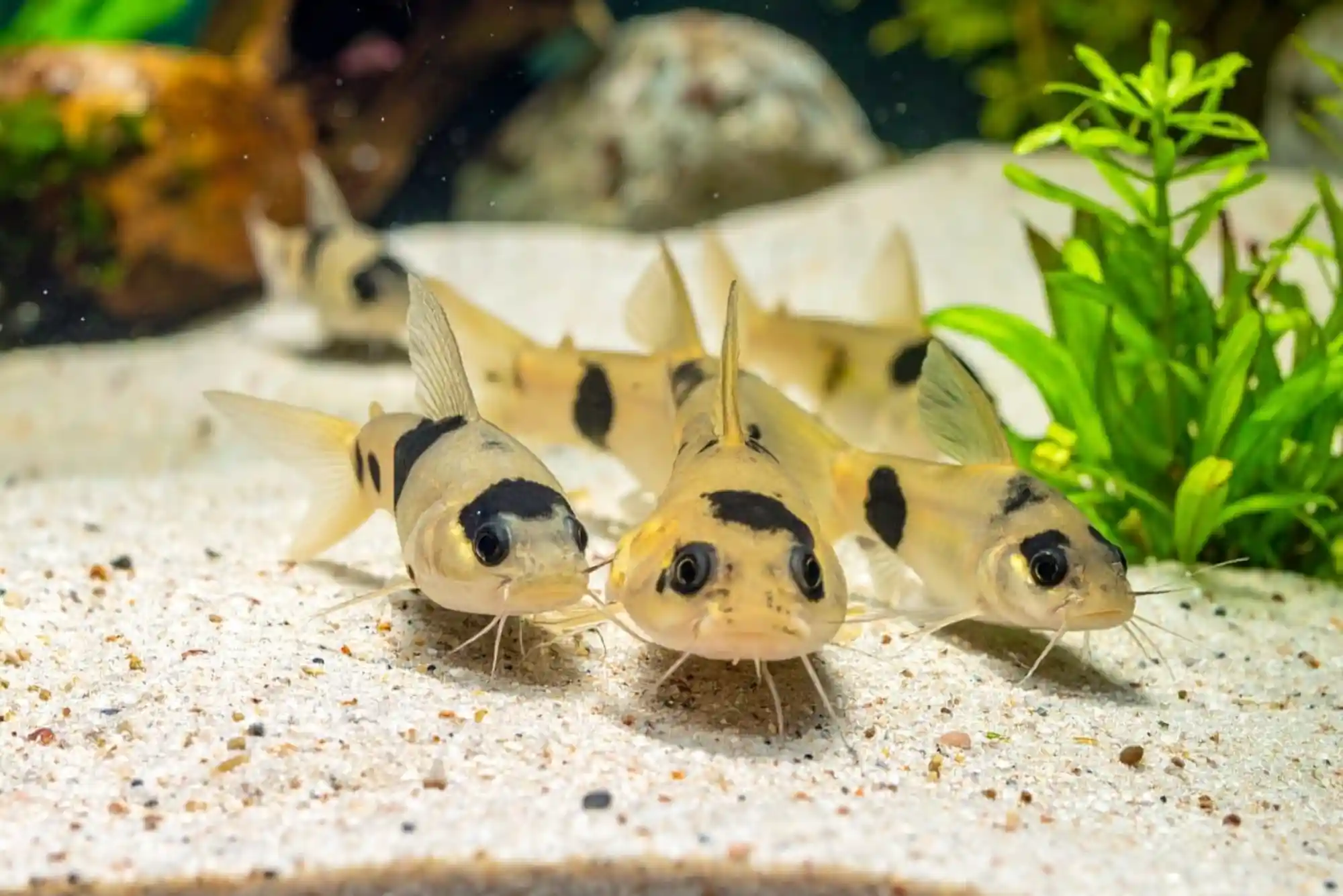
These small armored catfish naturally forage along sandy bottoms, using their sensitive barbels to search for food. In an aquarium, fine sand or smooth substrate allows them to perform this natural behavior safely. They are also social fish that generally do best in groups rather than being kept alone.
Whether you are setting up your first community aquarium or improving an established tank, understanding the fundamentals of Corydoras catfish care will help you create an environment where these fascinating bottom dwellers can thrive.
What Makes Corydoras Catfish Special?
Corydoras are small freshwater catfish belonging to the family Callichthyidae. There are well over 170 recognized Corydoras species, with additional species still awaiting formal scientific descriptions. They originate primarily from South America, where they inhabit streams, rivers, ponds, marshes, and backwaters.
Their behavior is one of their biggest attractions. Instead of remaining hidden all day like some catfish, Corydoras often spend considerable time exploring the aquarium floor. They may suddenly dart toward the surface, forage through the sand, rest beneath plants, or gather together in an active group.
They are peaceful community fish, but their peaceful nature does not mean they can simply be placed in any aquarium. Species vary in adult size, preferred temperature, and minimum aquarium dimensions, so choosing a species that suits your particular setup is an important part of responsible Corydoras catfish care.


Corydoras Catfish Care and Aquarium Setup
A mature, stable aquarium is more important than simply choosing a particular tank size. Corydoras should not be introduced into a newly established aquarium with unstable biological filtration. Good water quality is essential because these fish are sensitive to dirty conditions and neglected substrates.
For many commonly kept species, a larger footprint is more useful than an unusually tall aquarium. Corydoras spend most of their time near the bottom, so floor space gives them more room to forage and interact with their group.
Aqueon recommends around 30 gallons for many Corydoras species, while smaller species such as pygmy Corydoras can be maintained in smaller aquariums when their specific needs and stocking levels are considered. Individual species can differ considerably, so the adult size and recommended footprint should always be checked before purchase.
The aquarium should provide open areas for foraging along with plants, driftwood, smooth rocks, or other structures that offer shelter. A tank that combines open bottom space with secure hiding areas encourages natural behavior without making the fish feel exposed.
Water Quality and Temperature
Stable water quality is one of the most overlooked parts of Corydoras catfish care. The exact temperature and chemistry depend on the species, so there is no single parameter range that applies perfectly to every Corydoras.
Many commercially raised Corydoras tolerate moderately broad conditions. Aqueon gives a general captive-bred range of approximately 74–80°F and pH 7.0–8.0, while wild-caught fish and individual species can have substantially different requirements.
Rather than chasing a particular number, focus on stability, cleanliness, adequate filtration, and good oxygenation. Regular partial water changes help prevent the accumulation of waste and keep the aquarium environment more consistent.
Corydoras may occasionally swim rapidly to the surface and gulp air. This can be normal behavior because they can supplement oxygen through their specialized intestinal system. However, constant surface gasping can indicate poor water quality or inadequate oxygenation and deserves investigation.
Why Sand Is So Important for Corydoras
Substrate is one of the defining elements of good Corydoras catfish care. These fish are natural bottom foragers, and their barbels help them locate food in the substrate.
Fine aquarium sand is an excellent choice because it allows Corydoras to sift naturally without exposing their delicate barbels to rough or jagged surfaces. Species-specific care guides from Seriously Fish repeatedly recommend fine sand, while noting that smooth, rounded gravel can sometimes be used when it is kept exceptionally clean.
Sharp gravel is a poor choice because Corydoras constantly interact with the bottom. Abrasive material can damage their sensitive mouthparts and create conditions in which injuries or infections become more likely.
How to Maintain a Corydoras Sand Substrate
Sand is not automatically a low-maintenance substrate. Organic debris can accumulate on the surface, so regular aquarium maintenance remains necessary.
When cleaning, use a siphon carefully above the sand rather than aggressively plunging it deep into the substrate. The goal is to remove waste while leaving most of the sand in place.
Keeping the substrate clean is particularly important for Corydoras because poor bottom conditions can contribute to health problems, including barbel deterioration. Species-specific guidance also recommends avoiding undergravel filtration for Corydoras and maintaining clean substrate conditions.
A good sand bed also makes their natural feeding behavior much easier to observe. Watching a healthy Corydoras sift through the substrate is one of the most enjoyable parts of keeping these fish.
What Do Corydoras Catfish Eat?
Corydoras are omnivorous foragers, so their diet should include more than whatever food happens to fall from the surface. Treating them as aquarium cleaners can lead to inadequate nutrition.
A quality sinking pellet or tablet can form the foundation of their diet. These foods are designed to reach the bottom where Corydoras can actually consume them. They can also be offered appropriately sized frozen or live foods such as bloodworms, Daphnia, Artemia, and other small aquatic foods.
Variety is valuable because different foods provide different nutritional profiles and encourage natural feeding behavior. Rotating suitable sinking foods with occasional frozen or live foods can provide a more balanced routine.
How Often Should Corydoras Be Fed?
There is no need to heavily feed Corydoras simply because they spend so much time searching for food. Aqueon recommends feeding an amount that the fish can consume within approximately two to three minutes, once or twice per day.
The important point is making sure food actually reaches the Corydoras. If fast-moving tank mates consume everything before it reaches the bottom, the catfish may remain underfed despite the aquarium appearing well fed.
You can observe their feeding behavior to determine whether every fish is getting access to food. If some Corydoras consistently miss meals, distributing sinking food across more than one area can reduce competition.
How Many Corydoras Should You Keep Together?
Schooling and social behavior is another central part of Corydoras catfish care. These fish are naturally gregarious and generally become more confident and active when kept with their own kind.
Aqueon recommends groups of at least five, while broader guidance on schooling aquarium fish commonly recommends six or more. Species-specific recommendations can range from four to six to larger groups depending on the fish and aquarium dimensions.
For a typical community aquarium, keeping six Corydoras of the same species is a practical starting point when the aquarium has sufficient space. A larger group can often produce more natural behavior when the aquarium can comfortably support them.
You may notice that a group becomes more active after being moved from a small number to a larger social group. They may forage together, rest in the same area, and move around the aquarium with greater confidence.
Can Different Corydoras Species Live Together?
Different Corydoras species can sometimes be housed together, provided their environmental requirements are compatible. They may even interact or group together at times.
However, keeping several species does not always provide the same social benefit as maintaining a strong group of one species. If your aquarium has room for only a small number of Corydoras, building a proper group of one compatible species is generally more straightforward than dividing that number between several species.
Species-specific temperature requirements should also be considered. Some Corydoras prefer cooler conditions than others, so compatibility should be based on actual care requirements rather than appearance alone.
Corydoras Catfish Tank Mates
Because Corydoras are peaceful, they can work well in many community aquariums. Suitable companions are generally peaceful fish that do not bully, attack, or consistently outcompete them for food.
Small peaceful tetras, rasboras, certain dwarf cichlids, and other compatible community fish may work depending on the species and aquarium conditions. Seriously Fish recommends avoiding large or aggressive tank mates that could threaten these relatively small catfish.
The best community aquarium is not necessarily the one containing the greatest variety of fish. Instead, think about whether every species has enough space, appropriate water conditions, suitable food, and a safe place to retreat.
Common Corydoras Care Mistakes
One of the most common mistakes is assuming Corydoras survive entirely on leftovers. They are active foragers, but they still require deliberate feeding with appropriate sinking foods.
Another mistake is using sharp substrate. Because Corydoras repeatedly search the bottom with their barbels, substrate quality matters every day rather than occasionally.
Keeping only one or two Corydoras is another issue. Their social behavior means they generally benefit from being kept in a proper group. A larger group can also make their behavior much more visible and natural.
Finally, adding Corydoras to an immature aquarium can expose them to unstable or harmful water conditions. A stable biological system, effective filtration, regular maintenance, and careful acclimation are all essential parts of long-term Corydoras catfish care.
Creating the Right Home for Corydoras
Successful Corydoras catfish care comes down to understanding how these fish naturally live and forage. Give them a mature and stable aquarium, clean water, a soft sand substrate, nutritious sinking foods, and enough companions to express their social behavior.
The most important lesson is not to think of Corydoras as simple bottom-cleaning equipment. They are active, social fish with specific environmental and nutritional needs. When those needs are met, their natural personalities become much easier to appreciate.
FAQs
Do Corydoras catfish need sand or gravel?
Fine sand is generally the preferred substrate because Corydoras naturally forage through sandy bottoms and use their barbels while searching for food. Smooth, rounded fine gravel can be acceptable for some species if it is kept very clean, but sharp or abrasive gravel should be avoided.
How many Corydoras should be kept together?
A group of at least five or six is a sensible target for many commonly kept Corydoras. Some species-specific care guides recommend four to six, while broader aquarium guidance recommends six or more for schooling fish. The appropriate number ultimately depends on the species, tank footprint, and overall stocking.
What do Corydoras catfish eat?
Corydoras are omnivorous bottom foragers. Their diet can include quality sinking pellets or tablets supplemented with suitable frozen or live foods such as bloodworms, Daphnia, Artemia, and similar small foods. They should not be expected to live on leftovers from other aquarium inhabitants.
Can Corydoras live alone?
Corydoras can survive temporarily when kept alone, but they are social fish and generally show more natural, confident behavior when maintained with other Corydoras. Keeping an appropriate group is therefore an important consideration when planning their aquarium.
Do Corydoras clean the aquarium?
Corydoras help consume food particles that reach the bottom, but they are not a substitute for aquarium maintenance. They still need their own nutritious diet, and uneaten waste should be removed through normal filtration and cleaning.
Why are my Corydoras swimming to the surface?
Occasional rapid trips to the surface can be normal Corydoras behavior because they can gulp atmospheric air. However, repeated or continuous surface gasping can indicate problems such as poor water quality or insufficient oxygenation and should be investigated promptly.