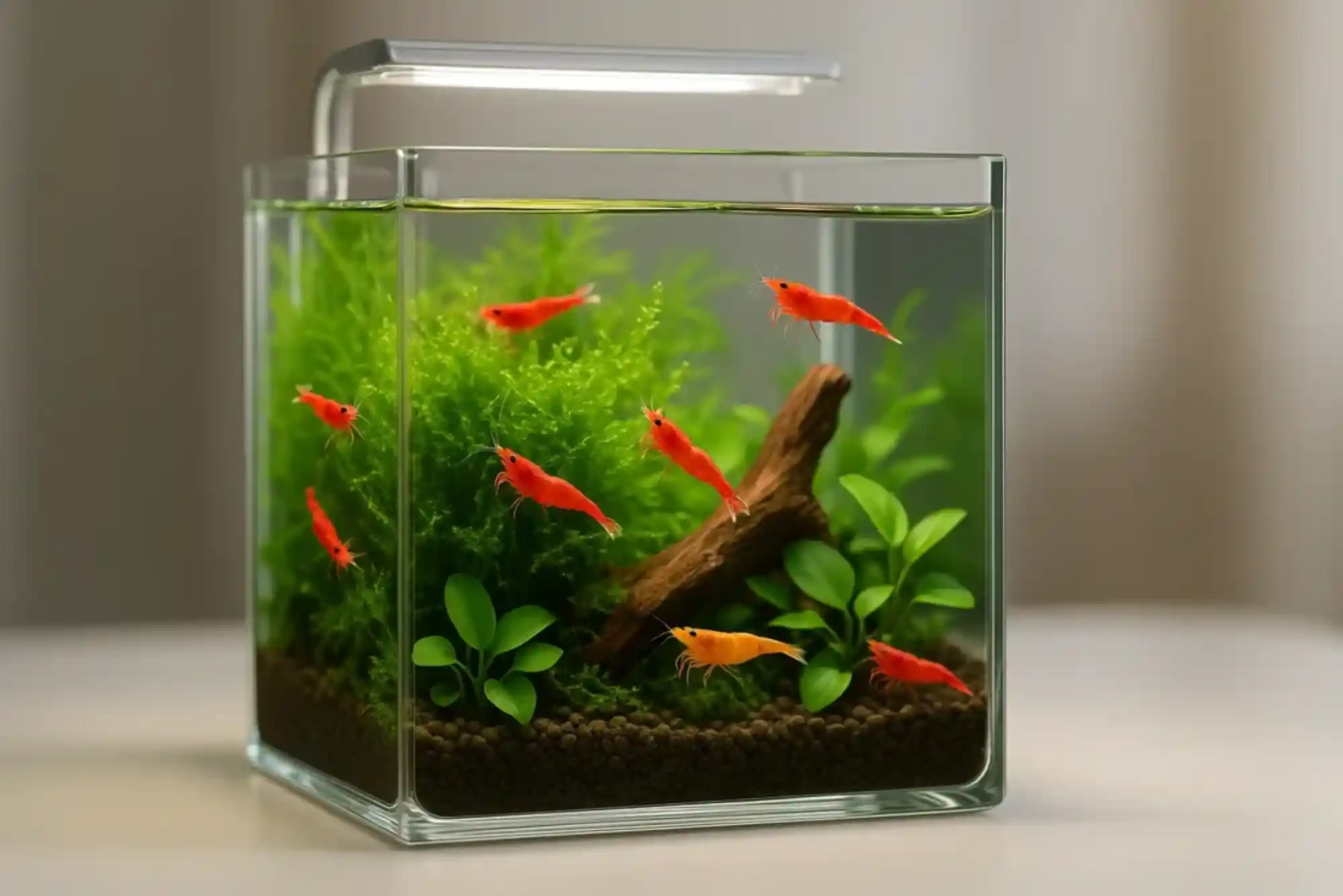

Introduction
If you are wondering, How Often Should You Change Aquarium Water? Best Routine Schedule is a question every aquarium owner should understand. Regular water changes are one of the simplest ways to support healthy fish, plants, and beneficial bacteria. Even a well-filtered aquarium needs partial water changes because filtration cannot remove every unwanted substance.
Fish continuously release waste into their environment. Uneaten food, decaying plant matter, and other organic material also affect water quality. Over time, these materials can increase nitrate levels and make the aquarium less suitable for aquatic life.
A consistent water-change routine keeps the environment more stable. It also helps maintain clearer water and reduces the risk of problems caused by poor water quality. However, the ideal schedule depends on tank size, stocking levels, filtration, feeding habits, and the species you keep.
How Often Should You Change Aquarium Water?
For most established freshwater aquariums, changing around 20% to 30% of the water once a week is a practical starting point. This routine works well for many community tanks with moderate stocking and good filtration.
Some lightly stocked aquariums may remain stable with changes every two weeks. Heavily stocked tanks, breeding tanks, or aquariums with high waste production may need more frequent maintenance.
Therefore, there is no single schedule that works for every aquarium. Instead, water testing should help determine whether your routine is keeping water parameters within suitable ranges.


A weekly partial water change is generally safer than replacing most of the aquarium water at once. Large changes can sometimes create sudden differences in temperature, pH, hardness, and other parameters.
Why Regular Aquarium Water Changes Matter
Aquarium filtration plays an important role in maintaining water quality. Mechanical filtration captures particles, while biological filtration supports beneficial bacteria that process toxic ammonia and nitrite.
However, filtration does not eliminate every dissolved substance. Nitrate can gradually accumulate as part of the aquarium’s nitrogen cycle. Regular water changes help remove nitrate and replenish some minerals used by aquatic organisms.
Water changes can also reduce dissolved organic compounds and other contaminants. This creates a cleaner environment without completely disrupting the biological system.
For beginners, consistency is often more important than performing complicated maintenance routines. A simple weekly schedule can make aquarium care easier to manage.
How Much Aquarium Water Should You Change?
The amount of water you replace depends on the aquarium’s condition. For routine maintenance, a 20% to 30% partial water change is suitable for many established tanks.
If nitrate levels are higher than recommended, a larger partial change may be appropriate. However, the cause of elevated nitrate should also be addressed.
For example, excessive feeding can create unnecessary waste. Overstocking can also increase the biological load beyond what the aquarium can comfortably handle.
If the tank regularly develops poor water parameters despite frequent changes, increasing the percentage alone may not solve the problem. You may need to review feeding, stocking, filtration, and maintenance practices.
How Often Should You Change Aquarium Water in a New Tank?
New aquariums require special attention because their biological filtration is still developing. During the cycling process, ammonia and nitrite can become dangerous for fish.
If fish are already present, regular testing becomes especially important. Water changes may be necessary when ammonia or nitrite rises to unsafe levels.
A properly cycled aquarium generally becomes easier to maintain. Beneficial bacteria establish themselves on filter media and other surfaces, helping process fish waste.
However, cycling does not mean water changes are no longer necessary. Even mature aquariums still require routine partial water changes to manage nitrate and maintain overall water quality.
How Often Should You Change Aquarium Water With Fish?
Fish stocking levels strongly influence your maintenance schedule. A lightly stocked aquarium usually produces less waste than a heavily stocked aquarium.
For example, a large tank containing a few small fish may remain stable longer than a smaller tank containing many fish. Tank volume provides more dilution, while stocking density determines how quickly waste accumulates.
Your fish species also matter. Some species produce more waste than others. Bottom-dwelling fish and active species can contribute significantly to the aquarium’s overall biological load.
Observe your water test results rather than relying only on the calendar. If nitrate rises quickly between weekly changes, your aquarium may need more frequent maintenance.
How Often Should You Change Aquarium Water in a Planted Tank?
Planted aquariums can have different water-change requirements. Healthy aquatic plants absorb nutrients and can contribute to better water quality.
However, plants do not completely replace water changes. Aquatic plants also require minerals and nutrients, while decaying leaves can contribute to organic waste.
Aquarium owners who use fertilizers or carbon supplementation should monitor water parameters carefully. A consistent maintenance routine helps prevent unwanted nutrient accumulation.
Water changes can also help maintain a predictable environment for plants and livestock. This is particularly useful in aquariums where water chemistry is carefully managed.
The Best Routine Schedule for Aquarium Water Changes
For many home aquariums, a weekly maintenance routine is an excellent starting point. Choose one day each week and perform a partial water change at roughly the same time.
Before changing water, check the aquarium’s general condition. Look at fish behavior, water clarity, filter performance, and visible debris.
Test important parameters when appropriate. Nitrate is especially useful for evaluating whether your regular water-change routine is sufficient.
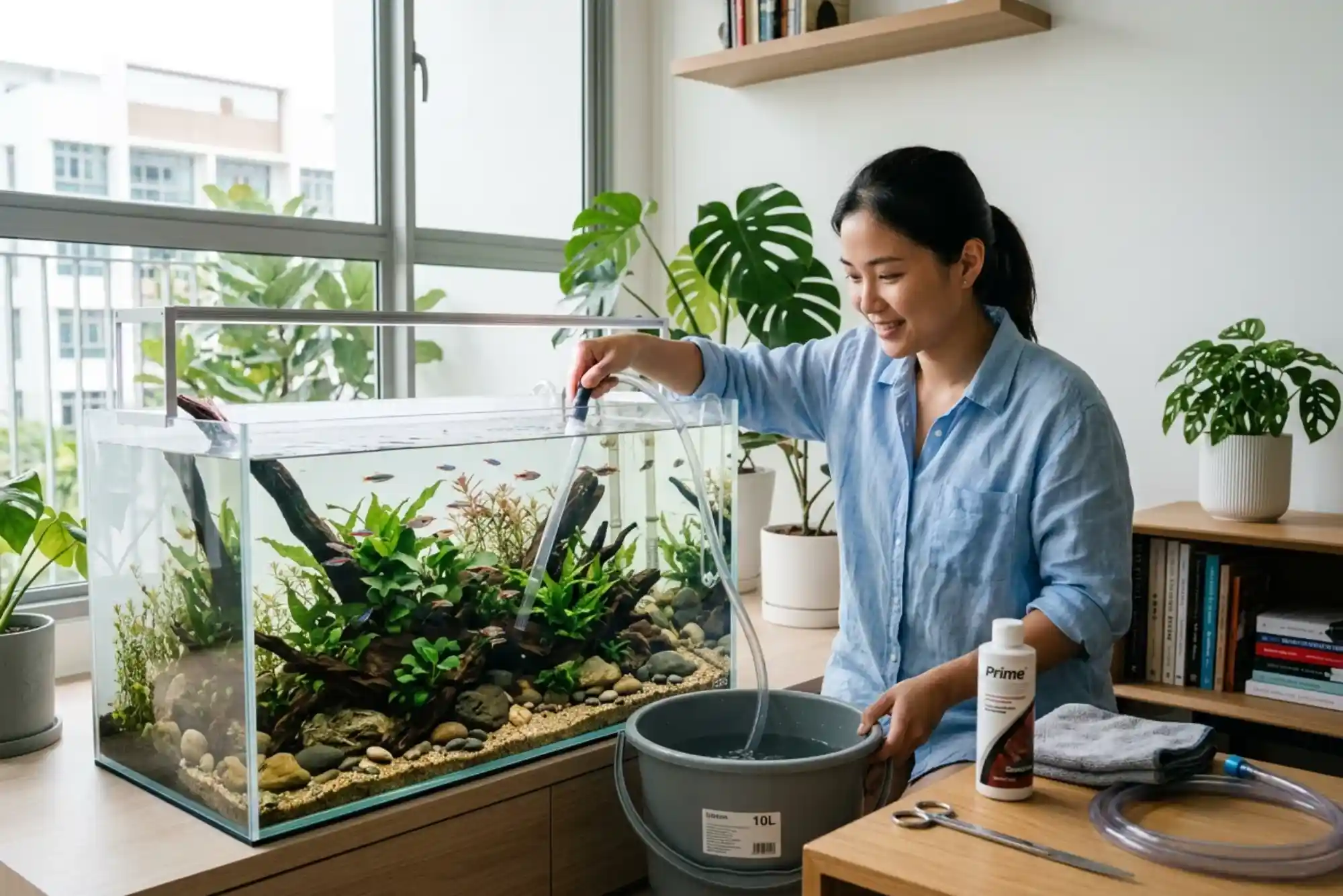
During the water change, remove the appropriate amount of old water. Use a gravel vacuum to remove debris from the substrate without aggressively disturbing every area.
Prepare replacement water with a suitable water conditioner. The new water should also be close to the aquarium’s temperature to minimize stress.
For additional guidance, aquarium owners can explore these practical Water Maintenance Tips to build a more consistent maintenance routine.
How to Perform an Aquarium Water Change Correctly
Start by preparing clean equipment specifically for aquarium use. Avoid buckets or tools that have previously contained household chemicals, detergents, or other contaminants.
Switch off equipment that could run dry during the water change. Depending on your setup, this may include heaters, pumps, or filters.
Remove the desired amount of aquarium water using a siphon or suitable container. While doing this, gently vacuum the substrate to remove accumulated debris.
Next, prepare fresh water with an appropriate aquarium water conditioner. Tap water may contain chlorine or chloramine, which can harm fish and beneficial bacteria.
Add the prepared water slowly. Avoid creating strong currents that could disturb fish, plants, or decorations.
Finally, restore your equipment and check that everything is operating normally. Observe the aquarium for a few minutes after completing the change.
Why Water Temperature Matters During Water Changes
Temperature differences can stress fish. Therefore, replacement water should be reasonably close to the aquarium’s existing temperature.
Sudden temperature changes can be particularly problematic for sensitive species. They may also cause fish to become stressed after routine maintenance.
A reliable aquarium thermometer can make this process easier. Instead of guessing, compare the temperature of the replacement water with the tank.
Small differences are usually easier for fish to tolerate than sudden and substantial changes. Taking a few extra minutes to prepare replacement water can make maintenance safer.
Understanding Aquarium Water Hardness and pH
Water chemistry is another important consideration when deciding how often to change aquarium water. pH measures acidity or alkalinity, while hardness describes the concentration of dissolved minerals.
Different fish have different preferences for water chemistry. Some species naturally live in soft water, while others thrive in harder water.
A sudden change in these parameters can cause unnecessary stress. For this reason, aquarium owners should understand their source water before establishing a long-term routine.
For a deeper explanation of these factors, the Water Hardness & pH Guide can help aquarium keepers understand how hardness and pH influence aquatic environments.
Signs Your Aquarium Needs More Frequent Water Changes
Your aquarium may need a revised maintenance schedule if water quality deteriorates quickly between changes. Persistent cloudy water, rising nitrate, excessive algae, or unusual fish behavior can indicate an underlying problem.
However, these signs should not automatically be blamed on insufficient water changes. Poor filtration, overfeeding, overcrowding, and decaying organic matter can also contribute.
Fish behavior is particularly useful to monitor. Reduced activity, unusual hiding, rapid breathing, or loss of appetite can indicate stress.
When something changes unexpectedly, test the water first. Testing provides useful information before you make major changes to the aquarium.
Should You Change Aquarium Water Every Day?
Daily water changes are usually unnecessary for a stable, mature aquarium. Performing them without a specific reason can create unnecessary work and may cause fluctuations in water chemistry.
However, emergency situations are different. If ammonia or nitrite reaches dangerous levels, more frequent water changes may be necessary.
New tanks can also require additional intervention during cycling. In such cases, water testing should guide maintenance rather than following a fixed weekly schedule.
The goal is not to change water as often as possible. The goal is to maintain stable and healthy water conditions.
Common Aquarium Water Change Mistakes
One common mistake is replacing almost all the water during routine maintenance. Large water changes can cause sudden environmental changes, especially when replacement water differs significantly from the aquarium.
Another mistake is cleaning everything at the same time. Aggressively cleaning the filter, substrate, decorations, and aquarium walls can unnecessarily disturb beneficial microorganisms.
Over-cleaning filter media can be especially problematic. Biological filter media should generally be handled carefully and rinsed appropriately rather than sterilized.
Using untreated tap water is another avoidable mistake. Always use an appropriate water conditioner when required by your water supply.
Finally, avoid relying entirely on appearance. Clear water does not necessarily mean chemically healthy water. Regular testing provides a much better picture of aquarium conditions.
How Redocean Can Help With Aquarium Maintenance
Consistent maintenance becomes much easier when you understand the relationship between water quality, filtration, stocking, and routine care. Aquarium owners can use Redocean as a helpful resource when building better aquarium maintenance habits.
The most effective approach is to create a routine that matches your specific aquarium. Keep records of water tests, water changes, feeding, and unusual observations.
Over time, these records can reveal patterns. You may discover that nitrate increases quickly after heavy feeding or that your aquarium requires additional maintenance during certain periods.
Conclusion
So, How Often Should You Change Aquarium Water? Best Routine Schedule depends on the individual aquarium. For many established freshwater tanks, a 20% to 30% weekly water change is a reliable starting point.
Still, your aquarium’s stocking level, filtration, feeding routine, plants, and water parameters should determine the final schedule. Regular testing can show whether your current routine is actually working.
The best aquarium maintenance plan is consistent, gentle, and based on evidence. Avoid unnecessary large changes, prepare replacement water properly, and monitor your fish closely.
If you want healthier fish and a more stable aquarium, start with a simple weekly maintenance routine today. Explore Redocean and its practical aquarium resources to improve your water-care routine and keep your aquatic environment in better condition.
Frequently Asked Questions
How often should I change the water in my fish tank?
Most established freshwater aquariums benefit from a partial water change every week. Around 20% to 30% is a common starting point for routine maintenance. However, heavily stocked tanks may need more frequent changes.
Is it OK to change aquarium water every week?
Yes, weekly water changes are generally suitable for many established aquariums. Regular partial changes help control nitrate and remove dissolved waste. The exact percentage should depend on your aquarium’s water parameters.
How often should I change 25% of my aquarium water?
Changing approximately 25% of the water once a week works well for many community aquariums. Test nitrate regularly to confirm that this schedule is keeping water quality stable.
Can you change too much water in a fish tank?
Yes, very large or frequent changes can cause sudden differences in temperature and water chemistry. These changes may stress fish. Partial water changes are generally preferable for routine maintenance.
How often should I clean my fish tank?
Basic aquarium maintenance is usually performed weekly, although not every component needs deep cleaning each time. Water changes, substrate cleaning, glass cleaning, and equipment checks can be incorporated into a regular routine.
Do aquarium plants reduce the need for water changes?
Aquatic plants can absorb nutrients and help support water quality, but they do not eliminate the need for water changes. Plant growth, stocking, fertilization, and aquarium size all influence maintenance requirements.
What happens if you don’t change aquarium water?
Without regular water changes, nitrate and other dissolved waste products can accumulate. Water quality may gradually decline, potentially causing stress and health problems for fish and other aquatic organisms.
Is a 50% water change too much?
A 50% change is not automatically harmful, but it may be unnecessary for routine maintenance in a stable aquarium. Larger changes are sometimes useful when correcting serious water-quality problems. Replacement water should be properly conditioned and reasonably close to the tank’s temperature.
Related Reading: Sales Rep Management Software for Field Teams — full guide
Related Reading: Guest Posting for Health Brands in Pakistan: A Regional Guide — full guide
Related Reading: دكتور مسالك بولية – التشخيص، العلاج، وأهم النصائح لصحة الجهاز البولي — full guide